
Get the most out of your training.
Why do we train on the track? Why do we start with a lactate test? And how do we make sure you get the most out of every session?
Why we start with a lactate test.
Most runners train by feel, by the heart rate zones on their watch, or by a formula. Those are all estimates, and they are often off. The result: easy runs are too fast and hard sessions are not hard enough.
A lactate test measures what actually happens in your body. That replaces the estimate with a measurement, before the first session even starts.
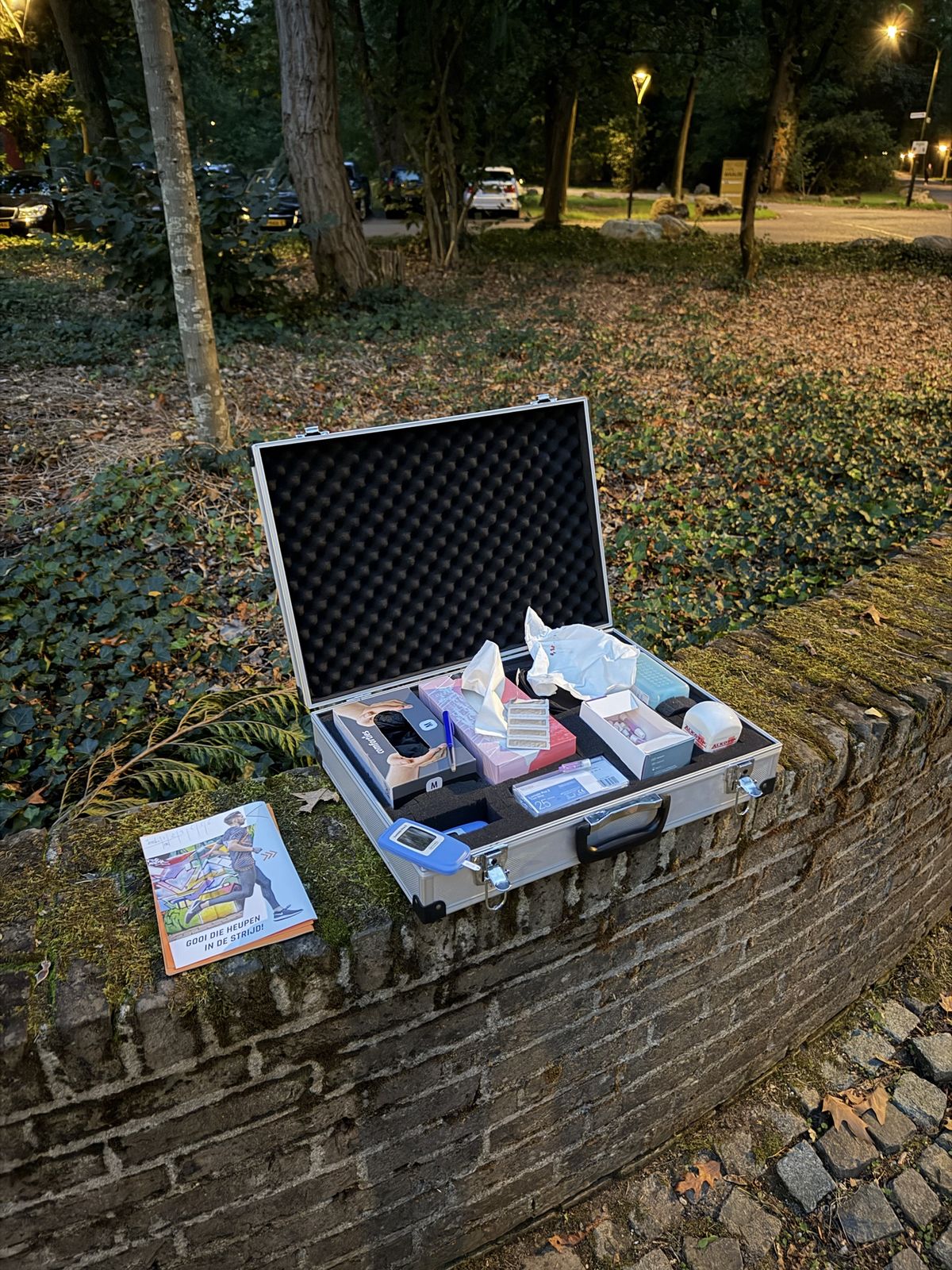
What is a lactate test?
After a warm-up, you run 6 times 1 kilometre, each kilometre a little faster than the one before. From easy to hard. After each kilometre we take a drop of blood from your fingertip and measure your lactate, your heart rate and how hard it felt. The whole test takes about 45 minutes.
Why it works
Lactate is a substance your body produces during exercise. At an easy pace, your body clears it as fast as it produces it. As you go faster, you reach two thresholds: lactate threshold 1 (LT1) and lactate threshold 2 (LT2). At LT1, lactate starts to rise: you leave the easy zone. At LT2, lactate rises quickly and you can no longer hold the pace for long.
Where those thresholds lie differs from runner to runner. Two runners with the same 10K time can have completely different zones. That is why we measure it instead of calculating it.
From thresholds to zones.
Using the thresholds from your test, we set the boundaries of each zone in pace, heart rate and RPE. So for every session you know exactly how hard to run, and why.
What do you get?
Concrete zones and thresholds based on heart rate, pace and RPE.
After the test you receive a detailed report with a graph of your measurements, the findings and what they mean for your training, and an overview of your zones based on pace, heart rate and RPE.
That report is the basis of your training: on the track, and with Pace and Peak also of your plan for the rest of the week.
Why before the start?
From the very first Wednesday you train at the right pace. On the track we run repetitions at exact paces, and those paces come from your test. Without a test, the first weeks would be guesswork; now you are spot on from day one.
Your plan is built on it. With Pace and Peak, we create your plan for the rest of the week. The zones from your test determine how hard your easy runs, endurance runs and quality sessions should be.
Easy becomes truly easy. Most runners run their easy sessions too fast. They end up in what we call grey-zone training: too hard to recover from properly, too easy to really get faster. Your test shows in black and white where your easy pace ends. By running your easy sessions truly easy, you are fresh enough to deliver real quality in your quality sessions.
Measurement and feel reinforce each other. The paces from your test are your compass. RPE, how hard it feels, is your daily check. Slept badly or had a busy week? You will feel it, and we adjust.
If you choose Track, there is no test. We then estimate your paces based on your level, for example your recent race times. That is a good estimate, but not a measurement.
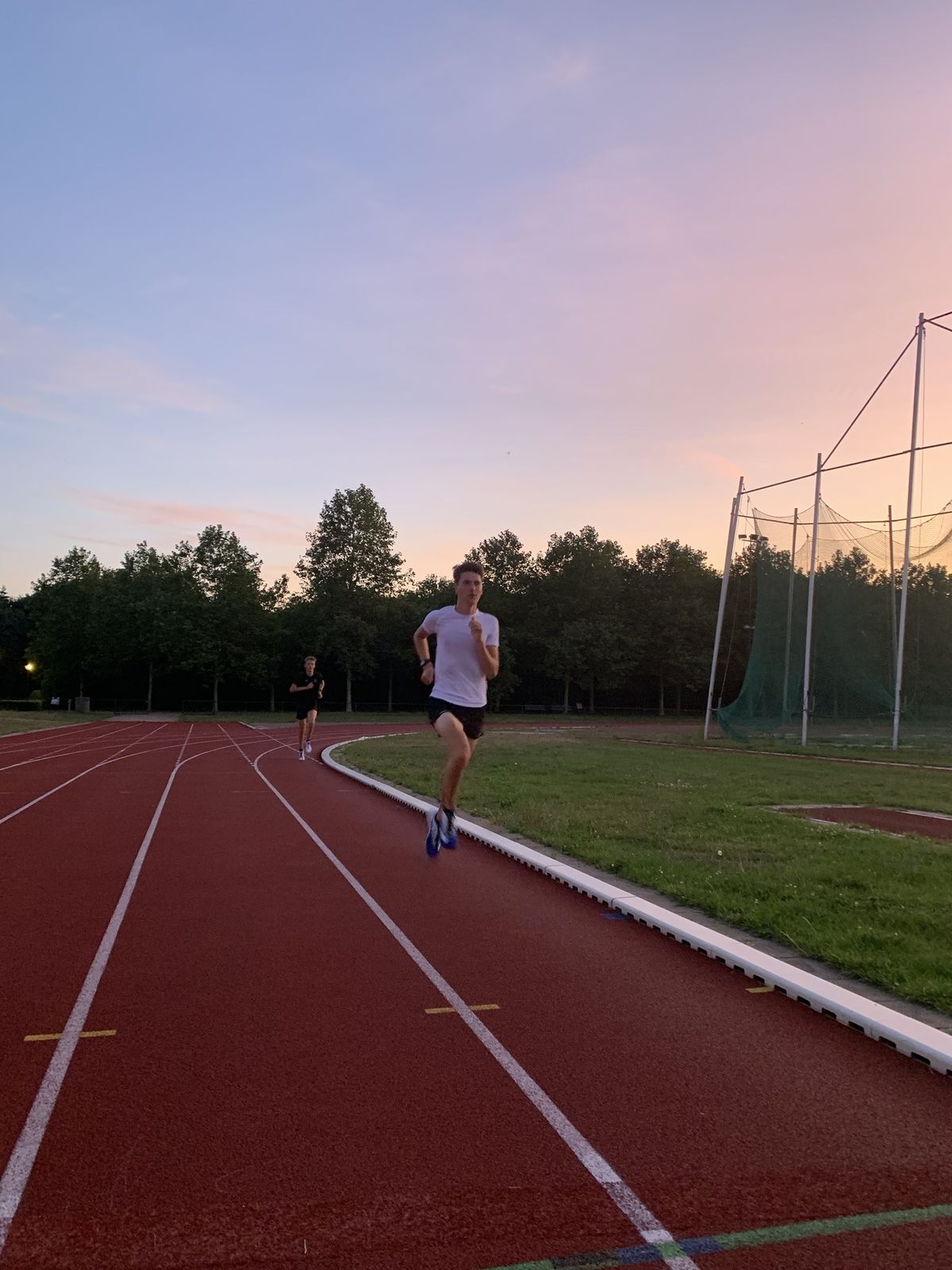
Why the track?
Getting faster calls for training with a plan: at the right pace, in the right environment. In winter, the road is not always suited to that. Dark, wet, slippery corners, wind and unreliable GPS.
On the track, all of that disappears. These are the right conditions to really improve.
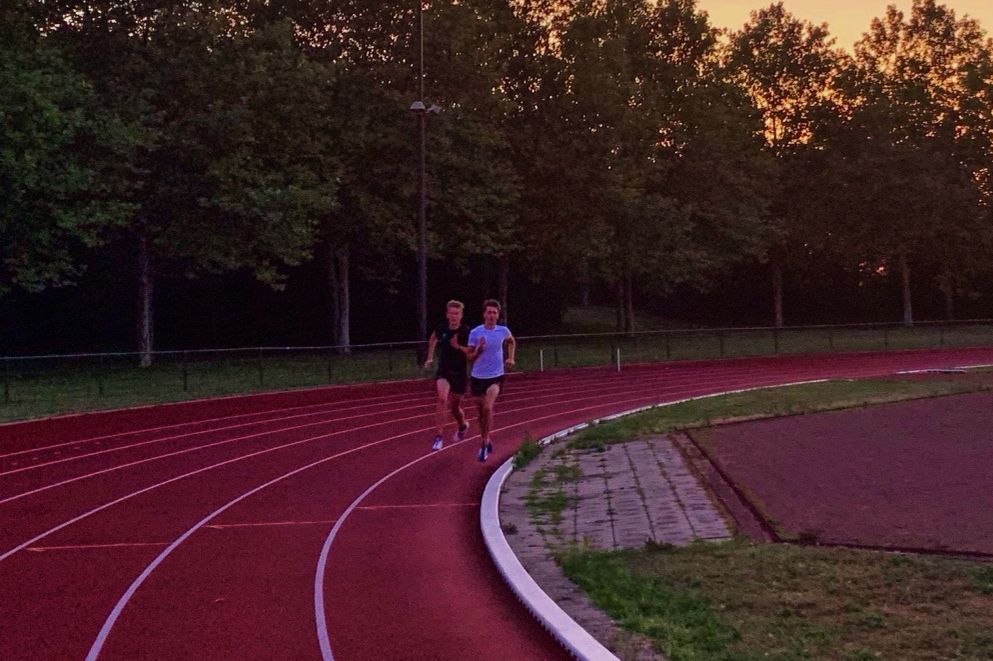
And you do it together. Running in a line with other runners, you work through your sessions and push each other to a higher level. The coaches stand trackside, see how everyone is doing at all times, and give direct feedback on the session and your running form.
Why speed, and why now?
At Gewoon Lekker Rennen we work with periodisation: your season is divided into blocks, each with its own goal. First a base, then build-up, then race-specific preparation. Each step builds on the previous one.
Eindhoven Speed Project is the block before your spring preparation. In winter, you do not yet have a race that calls for long runs and high volume. That gives you the chance to work on your base and your speed. A period to really train.
The faster you are, the easier the same pace feels. Your marathon or half marathon pace becomes relatively easier, because your ceiling
has gone up. You also work on a relaxed, efficient running form: running fast without tensing up. That pays off at every distance.
So in spring you do not start your training block from zero, but with a higher ceiling
and better technique.
What a Wednesday looks like.
Every Wednesday from 19:00 to 20:30. Every track session has the same structure. The main set changes each week; the structure stays the same.
Warm-up
An easy warm-up, so your muscles and heart are ready for the work.
RPE 2–3
Running drills
This is where we work on your technique and running economy: hip position, foot strike, reactivity and rhythm.
Main set
Repetitions at your paces, with recovery in between. From relaxed fast efforts to longer blocks around your threshold.
Cool-down
Easing off gently, so your recovery starts straight away.
RPE 1–2
RPE is a scale from 1 to 10 for how hard a session feels. Together with the paces from your lactate test, it tells you exactly how hard to run.
Our science-based approach.
Eindhoven Speed Project follows the same method as all Gewoon Lekker Rennen training. It is based on scientific insights into how your body adapts to training: what a session does, how you recover from it, and how to measure that. Combined with our own experience as active runners.
Stimulus and recovery
A session is two things: a stimulus and the recovery from it. You get better in the hours and days afterwards. Your body does not just recover, it builds a little extra: supercompensation. A plan places the right stimulus at the right moment and deliberately schedules recovery in between.
80/20
About 80% of your training is easy, 20% intense. That builds a strong foundation and leaves you energy for the sessions that really count, like Wednesday on the track.
Periodisation
We alternate build-up and recovery, usually three weeks of building followed by an easier week. In that week your body clears accumulated fatigue, and the gains from the previous weeks really come through.
Consistency over intensity
Progress comes from what you repeat week after week, not from that one hard session. Better to do your sessions every week than go very hard once and then stand still with an injury.
Measure and feel
Your paces come from your lactate test; your daily check is RPE. So you train at what your body can handle that day, with hard numbers as the basis.
Feedback and adjustment
With Pace and Peak, your plan is in TrainingPeaks. Your coach follows your data and progress and adjusts your plan when needed. Harder than expected, or something bothering you? That is exactly the information we need.
Your time is too valuable for training without a purpose.
You train alongside your work, your family and the rest of your life. That is why every session has to deliver the maximum. So we do everything we can to make every session as good as possible: measured paces instead of estimates, a build-up that makes sense, and coaches who keep an eye on you.
Training well also means training smart. Speed sessions demand a lot from your muscles and tendons. By doing them at the right pace and with enough recovery, you get faster without unnecessary injury risk. So you start your spring training block fit and strong.
When we think about all of this, build your plan and monitor your progress, you know you are doing everything right, and you can simply enjoy your running.